Key takeaways
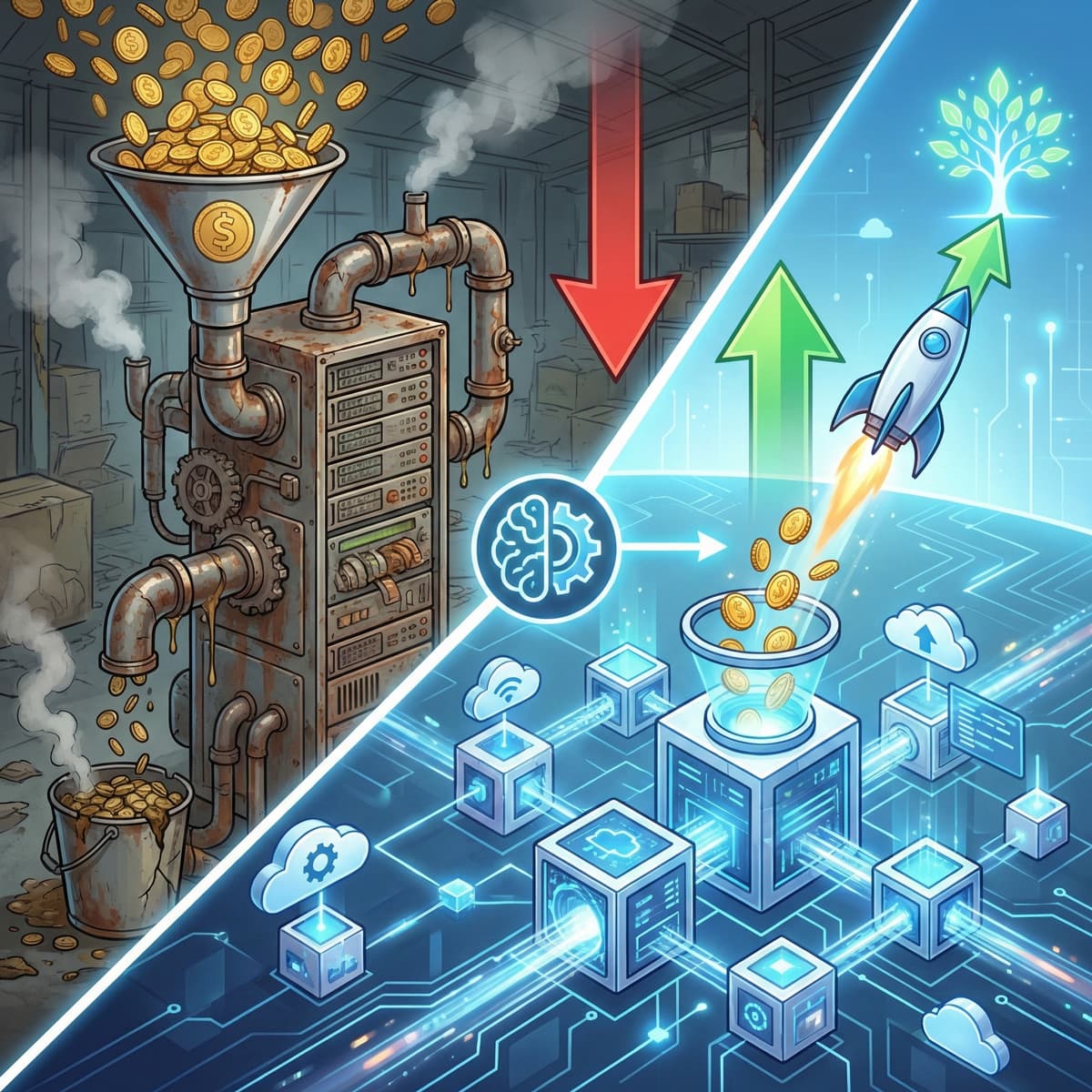
- 75% of IT budgets go to maintaining legacy systems, leaving almost nothing for innovation
- 65% of digital transformation projects fail to generate returns, usually because they start with technology instead of strategy
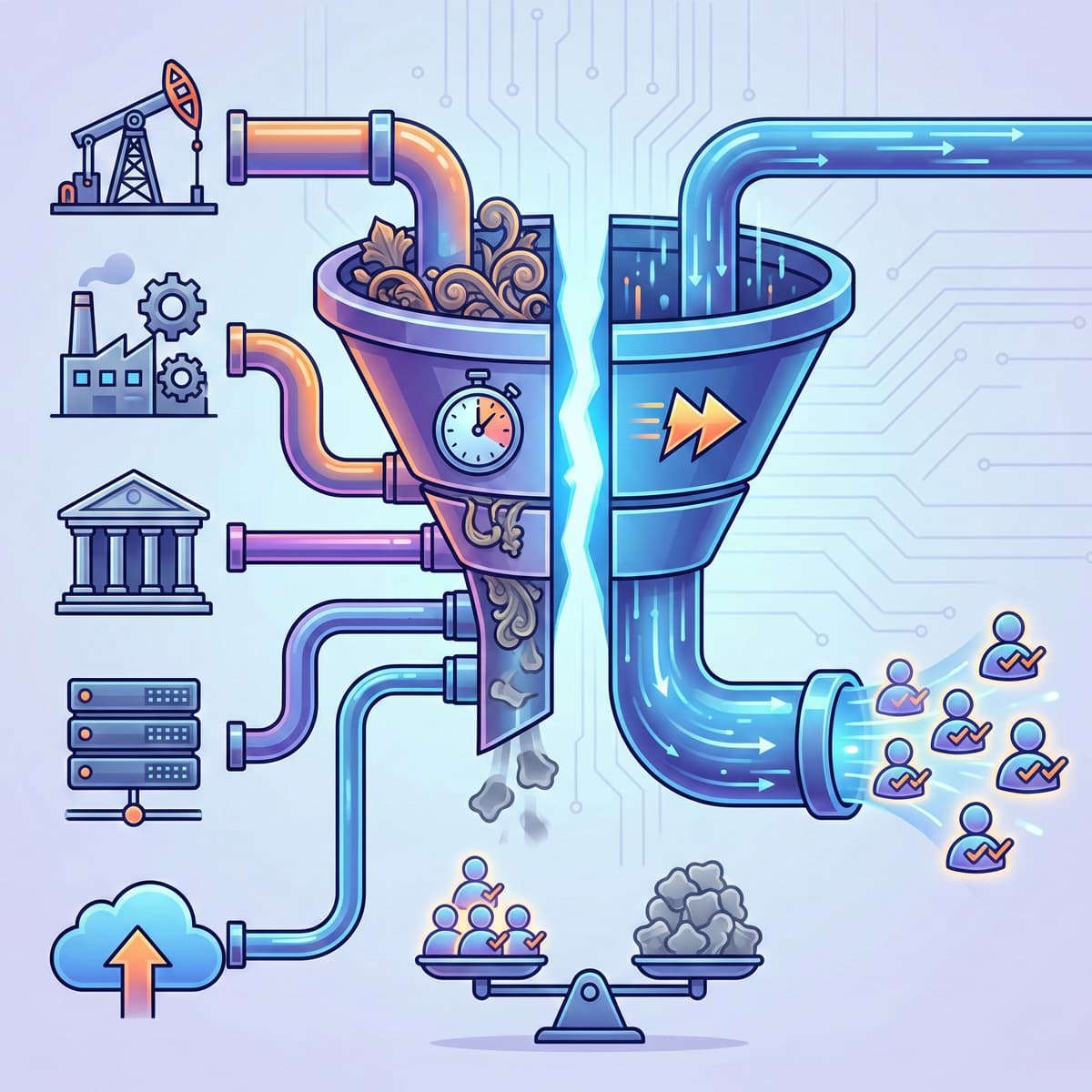
- Oil and gas companies: 78% adopted digital transformation, but 70% are stuck in pilot phase and can't scale
- A headless CMS architecture can cut ongoing maintenance costs by 40-60% compared to legacy monolithic systems
- The biggest cost of legacy systems isn't what you spend maintaining them -- it's the revenue you lose while competitors move faster
Where the money actually goes
I want to talk about a number that most enterprise IT leaders already know but rarely say out loud.
75% of the average enterprise IT budget goes to maintaining existing systems. Not building new things. Not improving anything. Just keeping the lights on.
That means for every R4 million you spend on IT, R3 million goes to patching, updating, hosting, and troubleshooting systems that were built for a different era. The remaining R1 million is what you have left for everything else. New features, performance improvements, competitive advantages: all of it has to come out of that 25%.
This is not a technology problem. This is a business problem wearing a technology hat.
The hidden tax on growth
Legacy system maintenance is expensive in ways that don't show up on a budget spreadsheet. The line items you can see are bad enough. The ones you can't see are worse.
The patching treadmill
Older CMS platforms need constant security patches. WordPress sites running on outdated PHP versions with 30 plugins need weekly attention. Proprietary enterprise CMS platforms need vendor-specific updates that often break custom functionality. Every patch is a small project. Some patches become large projects when they conflict with customisations your team made four years ago.
I've worked with companies that have a full-time developer whose primary job is keeping the website from breaking. Not improving it. Just preventing it from falling over. That's a salary, benefits, and management overhead dedicated to standing still.
The content bottleneck
This is the one that frustrates marketing teams the most. Your marketing director wants to publish a new landing page for a campaign launching next week. On a modern system, that's a 2-hour task. On a legacy CMS with custom templates, hard-coded layouts, and fragile dependencies, it's a 2-week ticket in the dev queue.
The campaign launches late. Or it launches with a generic page that doesn't match the brand. Or it launches on a separate microsite that creates SEO fragmentation. None of these outcomes are good, and all of them happen because the underlying system can't keep up with the speed of the business.
The security exposure
Legacy systems are inherently more vulnerable. The older the codebase, the more known exploits exist. The more plugins and extensions bolted on over the years, the larger the attack surface. 81% of organisations plan to adopt zero-trust security frameworks by 2026, but you can't bolt zero-trust onto a monolithic CMS that was designed in 2012.
We've seen what happens when enterprise websites get compromised. The hidden cost of cheap hosting isn't just about slow pages. It's about architectural decisions that compound into security liability.
Why 65% of digital transformations fail
Here's a stat that gets quoted a lot but rarely examined: 65% of digital transformation initiatives fail to generate returns exceeding their original investment.
Having watched several of these projects from the outside (and occasionally from the inside), the failure pattern is remarkably consistent.
They start with technology instead of outcomes
Someone at the executive level reads a report about cloud migration or AI or digital transformation and decides the company needs to "go digital." A consultant is hired. A platform is selected. A budget is allocated. Nobody asks the question that matters: what specific business outcome are we trying to improve?
The projects that succeed start with a measurable goal. "We need our marketing team to publish landing pages without developer involvement." "We need our site to load in under 2 seconds globally." Those are goals you can measure. You can tie them to revenue or cost savings. You can tell, six months later, whether the project worked.
They try to change everything at once
The all-or-nothing approach is the most common way to burn R2 million and get nothing for it. Full platform migration, new CMS, new hosting, new design, new content, all at once. The project takes 18 months. Requirements change halfway through. Key people leave. The budget doubles. By the time it launches, the original goals are forgotten and the new system has already accumulated its own technical debt.
They don't measure the right things
If your only success metric is "did we launch the new system," you've already lost. Launch is the starting line, not the finish line. The companies that succeed measure cost of content publication, time to deploy a change, page load speed, conversion rate, and maintenance hours per month. They measure these things before the migration and after. If the numbers don't improve, the transformation didn't work regardless of how shiny the new platform looks.
The "stuck in pilot" problem
This pattern shows up across multiple industries but it's especially visible in sectors with heavy legacy infrastructure.
In oil and gas, 78% of companies have adopted digital transformation initiatives. That sounds impressive until you learn that 70% of those companies are stuck in pilot phase. They ran a proof of concept. It worked. And then it sat in a PowerPoint deck for two years because nobody could figure out how to scale it across the organisation.
Hospitality shows similar patterns. Hotels invest in technology pilots for direct booking, guest experience, or operational automation. The pilot works in one property. Scaling it to fifty properties with different PMS systems, different internet infrastructure, and different staff capabilities is a completely different problem.
Manufacturing, logistics, financial services. Same story, different details. The pilot-to-production gap is where most digital transformation money goes to die.
The website is an interesting exception to this pattern. Unlike an operational system that needs to integrate with dozens of internal tools across multiple locations, a website is a single, centralised platform with a clear, measurable output. You can modernise it in 8-12 weeks and see results immediately. Which is why I keep telling enterprise clients: start with the website. Prove the value there. Then use that momentum for everything else.
What "modern" actually means
When I say modern architecture, I'm not talking about trends or buzzwords. I'm talking about a specific set of structural decisions that reduce maintenance cost and increase speed.
Headless CMS
Separate your content management from your frontend presentation. Your editors keep a familiar interface for writing and organising content. Your visitors get a fast, custom-built frontend that loads instantly. When one side needs an update, the other side isn't affected. We've written about the React vs WordPress decision in detail, and the headless approach often turns out to be the best of both worlds.
Containerised infrastructure
Instead of running everything on a single server where one component's failure takes down the whole site, containerised infrastructure isolates each piece. The database, the CMS, the frontend, the API layer, all run independently. If one needs scaling, you scale that one. If one fails, the others keep running. Our modern WordPress stack runs on this principle and it's the reason our sites stay up when traffic spikes.
API-first architecture
Every piece of your system communicates through defined APIs. This means your website, your mobile app, your partner portal, and your internal tools can all draw from the same content source without duplicating anything. It also means you can swap out any individual component without rebuilding the whole thing.
The common thread: modularity. Every decision reduces the blast radius of changes and the cost of maintenance. The opposite of monolithic legacy systems where everything is connected to everything and touching one thing breaks three others.
The migration path that actually works
Based on projects we've done and projects we've watched others do, here's the sequence that produces results without the catastrophic risk of a full rewrite.
Phase 1: Audit what you have
Before changing anything, measure everything. Page load times, monthly maintenance hours, content publication speed, conversion rates, security incidents. This is your baseline. Without it, you can't prove the migration worked. We walk through this process in our website redesign playbook.
Phase 2: Decouple the frontend
This is the highest-leverage first move. Keep your existing CMS and database. Build a new frontend that pulls content via API. Your content team keeps working in the system they know. Your visitors get a dramatically faster experience. Your maintenance burden drops because you're no longer patching a monolithic system end-to-end.
Phase 3: Progressive migration
Once the frontend is decoupled, you can migrate backend components one at a time. Move hosting to containers. Replace the CMS if needed. Upgrade the database. Each step is independent and reversible. No big-bang risk.
The whole process typically takes 8-16 weeks for a marketing-focused enterprise site. Not the 18-month nightmare that enterprise transformation projects are known for.
The bottom line
Legacy systems cost more to maintain than they cost to replace. Not in a theoretical future-state sense, but in actual monthly spend that you can measure.
The 75% figure isn't going away on its own. Every year you wait, the maintenance cost grows and the gap between your digital presence and your competitors' widens. The companies that modernised two years ago are publishing content in hours instead of weeks. They're ranking higher because their sites are faster. And their conversion rates reflect it.
Your legacy system is a monthly subscription to stagnation. The cancellation process is shorter than most people think.
Related reading
- A modern WordPress stack: how we run fast, secure sites -- The infrastructure architecture that eliminates most legacy headaches.
- From template site to high-performing asset: our website redesign playbook -- The audit and migration process we use with enterprise clients.
- The hidden cost of cheap hosting -- Why infrastructure shortcuts compound into expensive problems.
- React vs WordPress in 2026: which is right for your website? -- The technology decision framework that leads to headless architecture.