Key takeaways
- We design in two stages on purpose: wireframes settle structure and flow first, mockups settle the visual design second
- Wireframes are deliberately plain. Leaving out colour and styling keeps everyone focused on whether the structure works
- High-fidelity mockups turn the agreed structure into the finished look, including the states and edge cases a real build needs
- The same design work produces reusable assets for other channels, so the brand stays consistent beyond the website
- Designing in this order makes the expensive decisions while they are still cheap to change
Plan the experience, then design the surface
User experience and user interface are not the same thing, and we work on them in that order on purpose. UX is how the site is structured and how a visitor moves through it. UI is how it looks and feels once that structure is right. Get those two confused and you end up restyling the same broken layout three times.
So before a single pixel is styled, we settle the plan. This post walks through how we get from a blank page to a finished, well-considered design: wireframes first, mockups second, and a build that keeps both intact.
If you want the wider picture of what UX and UI design are and how they differ, start with What Is UX/UI Design? A Practical Guide. This post is the close-up on our process.
Stage one: wireframes settle structure
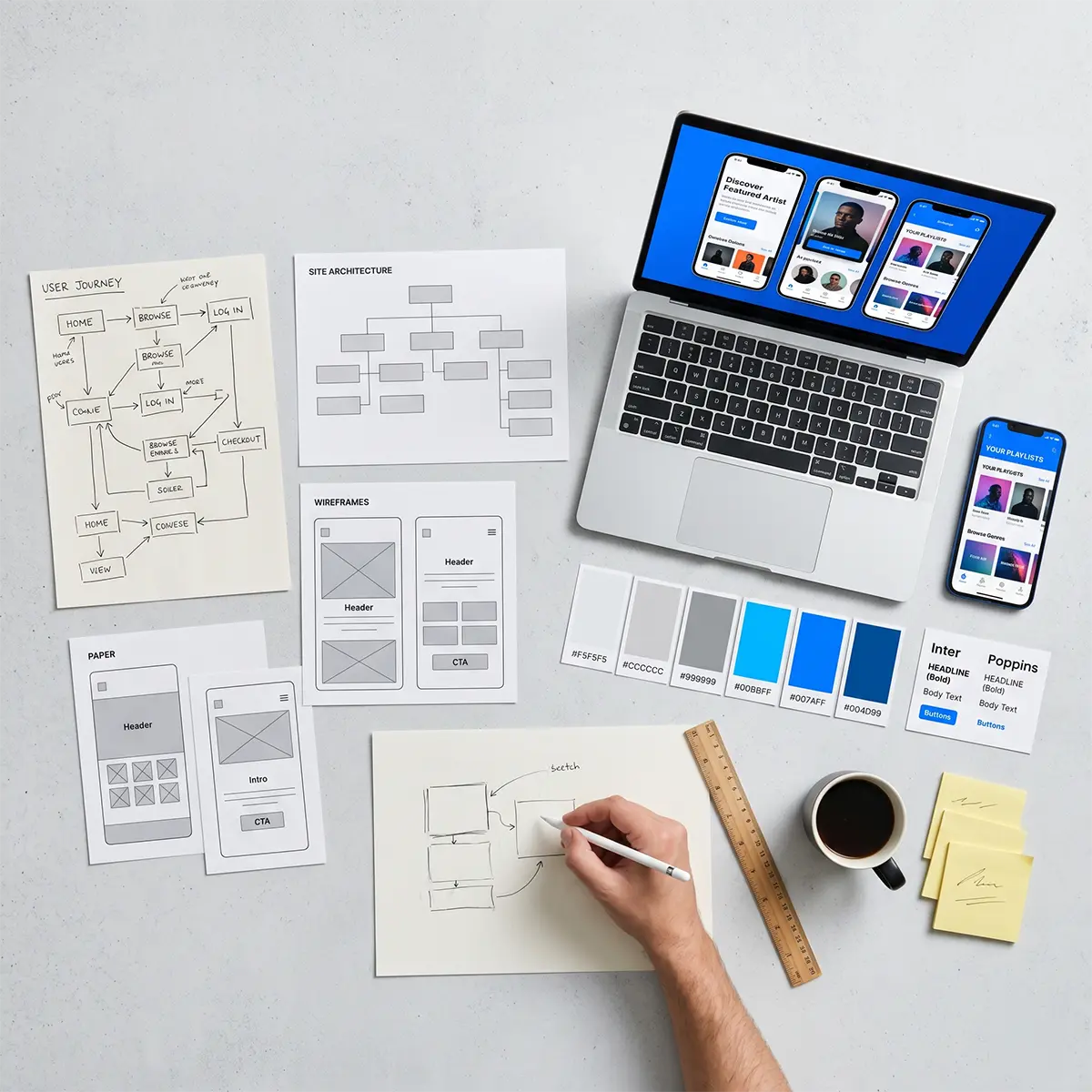
Wireframes are low-fidelity layouts that settle structure, hierarchy, and flow before colour and styling enter the picture. They are deliberately plain: boxes, labels, and real content order, in greyscale.
At this stage we are answering the questions that are expensive to get wrong:
- What does a visitor see first, and is it the thing that matters most?
- How many steps does it take to reach the main action, and can we remove any?
- What lives on each page, and what does not earn its place?
- Does the navigation use the words customers use?
Decisions here are cheap to change. Moving a section in a wireframe takes a minute. Moving it after the design is styled and built can take a day. That is the whole reason the stage exists.
What wireframes deliberately leave out
Wireframes leave out colour, final imagery, and polished styling on purpose. The moment a layout looks finished, feedback drifts to the surface: people react to the blue, the photo, the font. Those matter, but not yet.
Keeping wireframes plain keeps the conversation on structure and flow, which are the decisions that are hardest to change later. We would rather hear "this journey has a step too many" now than after the mockups are signed off.
Stage two: mockups settle the look
Once the wireframes are agreed, high-fidelity mockups settle the visual design. This is where brand, typography, colour, imagery, and spacing come in, applied to a structure everyone already trusts.
Good mockups are more than a single perfect screen. They cover the real states a build needs: hover and active states, empty states, error states, and how a layout behaves on a small screen versus a wide one. The aim is a finished product that is genuinely well planned rather than improvised in the browser at the end.
From mockups to a coherent brand
The same design work also produces digital assets you can reuse across other channels. The colours, type, and visual language settled in the mockups become source material for social and ad creative, print, and promotional branding, so the brand stays consistent everywhere it appears.
This is the quiet payoff of doing the design properly: you do not just get a website, you get a small design system the rest of your marketing can lean on.
The handoff: design that survives the build
A design is only as good as the version that ships. Because we design and build in-house, the approved mockups become the reference for a real, fast website rather than a wish list handed to a separate team and slowly watered down.
We build the design into a performance-first WordPress site, keeping the structure and the surface intact while hitting real load-speed and stability targets. A design that looks great but loads in four seconds has failed the visitor, so the build is part of the design job, not a separate phase.
When you can move faster
Not every project needs every stage at full depth. A simple brochure site might move quickly from a rough structure to design. A store or a site with custom functionality and real user journeys needs the full wireframe stage, because there is more that can go structurally wrong.
The principle holds either way: settle the plan before you settle the look, and make the expensive decisions while they are still cheap to change.
If you want this level of planning behind your build, our WordPress web design and development work starts here. Start a conversation and tell us what the site needs to do.